Lawn Care in Concord, GA
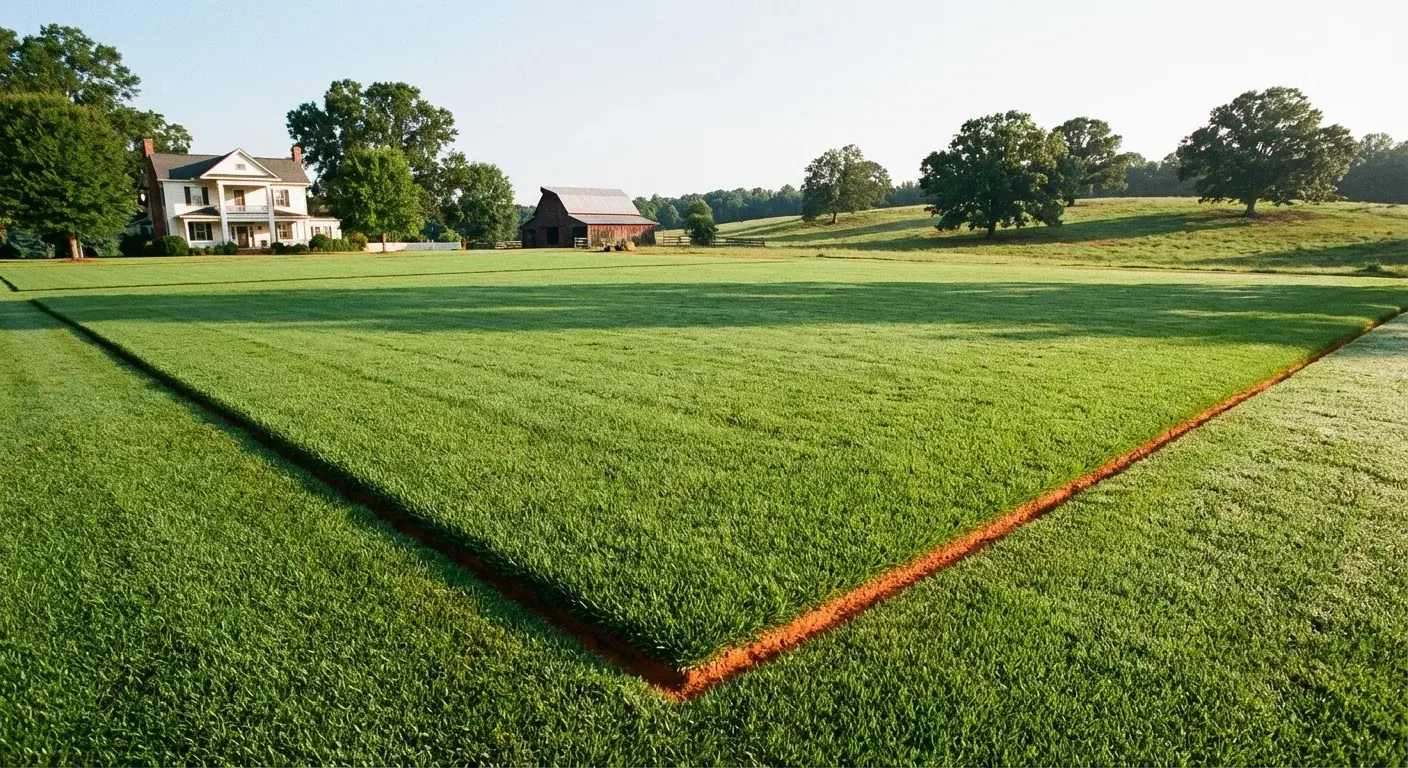
In Concord, I see a lot of sunny lawns that respond fast when you feed them right and stay ahead of weeds early.
Concord Lawn Care Overview
I work on a lot of lawns in Concord, and this little community in northern Pike County has some characteristics that make lawn care both rewarding and specific. Most Concord properties sit on open, sunny land with agricultural surroundings, which means Bermuda grass absolutely thrives here when it's managed properly. The full sun exposure means you get aggressive growth from April through September, and with the right fertilization timing and weed control program, these lawns can look outstanding. But that same sun exposure also means crabgrass, nutsedge, and dallisgrass get every advantage if you're not staying ahead of them with pre-emergent and targeted post-emergent treatments.
The soil in Concord is typical northern Pike County Piedmont red clay — dense, acidic, and prone to compaction. What I notice on a lot of Concord properties is that the soil compacts quickly because there's less tree cover to keep it shaded and moist. The clay bakes hard in summer, and if you haven't aerated in the fall, water runs right off instead of soaking into the root zone. I've picked up several Concord properties where the homeowner was watering faithfully but the grass was still struggling — and every time, compaction was the root cause. Once we aerated and got water actually reaching the roots, the turnaround was dramatic.
In Concord, I see a lot of sunny lawns that respond fast when you feed them right and stay ahead of weeds early. That's the good news — when you put the right program in place here, the results come quickly because these Bermuda and Zoysia lawns have everything they need in terms of sunlight. My job is to handle the soil, nutrition, and pest management so your grass can take full advantage of Concord's growing conditions.
Popular Lawn Care Searches in Concord, GA
These pages answer the questions I hear every week — pricing, cheap vs. quality, and what “best” actually means in Georgia.
Seasonal Lawn Care in Concord
Here's what your lawn needs throughout the year in Concord, GA — timed for Zone 8a warm-season turf.
spring
Spring in Concord is when I set the tone for the rest of the year. Pre-emergent goes down in late February before crabgrass germinates in the warming red clay. Once Bermuda breaks dormancy in early to mid-April, I start the first round of fertilization to push green-up and thickening. I also scout for early nutsedge and broadleaf weed emergence on these sunny Concord properties.
summer
Concord summers mean full sun and high heat, which pushes Bermuda growth hard but also stresses turf on compacted clay. I focus on targeted weed control for nutsedge and dallisgrass, monitor closely for armyworm activity in the open fields surrounding town, and adjust irrigation guidance to keep water penetrating the baked clay. Mowing height management is critical during peak heat.
fall
Fall is when I do the heavy lifting on Concord properties. Core aeration in September breaks up the compacted clay that summer heat has hardened, and I follow with a balanced fertilizer to support root development. This is also when I apply preventative grub control and treat any lingering weed issues before the lawn heads into dormancy. Overseeding shaded spots where applicable.
winter
Concord winters are mild but I stay busy. Pre-emergent for winter annuals like poa annua and henbit goes down in late September to October. I treat any active broadleaf weeds on warmer days when temperatures cooperate. I also use this time to plan soil amendments based on fall test results and prepare the treatment calendar for the coming spring season.
Part of Pike County, GA
What I Watch For in Concord, GA
- Spring pre-emergent timing matters (crabgrass doesn’t wait on you).
- Clay compaction shows up as thin spots and runoff after storms.
- Humidity-driven fungus pressure ramps up in summer.
Services in Concord, GA
Click a service below for a page focused on that exact work in Concord, GA.
Nearby Cities in Pike County
We also provide lawn care in these nearby cities.
Common Lawn Problems in Concord
These are the issues I run into most often when treating lawns in Concord, GA.
Aggressive Crabgrass in Full-Sun Yards
Concord's open, sunny properties are crabgrass magnets. With minimal tree cover, the soil warms faster in spring and stays warmer longer, giving crabgrass an extended germination window. I see more crabgrass pressure on sunny Concord lots than almost anywhere else in Pike County. The two-round pre-emergent approach is especially critical here — late February for the first barrier and late April for the second. Once crabgrass gets established in a sunny Concord yard, it grows aggressively and can crowd out Bermuda in thin areas fast.
Nutsedge in Irrigated and Low-Lying Areas
Yellow nutsedge pops up fast on Concord properties, especially where irrigation creates consistently moist conditions or where the natural grade holds water after rain. The agricultural surroundings mean there's no shortage of nutsedge pressure from adjacent fields and ditches. I treat nutsedge with sedge-specific herbicides that target the tuber system underground, and I work with homeowners on irrigation adjustments that reduce the wet conditions nutsedge needs to establish.
Hard-Baked Clay in Summer
The combination of full sun and Piedmont red clay makes Concord properties especially prone to soil that bakes rock-hard by midsummer. When the clay seals up, water pools on the surface or runs off instead of soaking in, and grass roots can't expand. I've walked Concord lawns where a screwdriver won't push into the ground more than half an inch in August. Annual fall aeration is absolutely essential here — it's the only way to break that cycle and get water and nutrients back into the root zone.
Armyworm Damage from Adjacent Agricultural Fields
Concord's agricultural surroundings create a direct pipeline for fall armyworms to migrate into residential lawns. Armyworm moths lay eggs in crop fields and pastures, and the larvae can march right into your yard when they run out of food. I monitor Concord properties especially closely from July through October because infestations can hit earlier and harder here than in more wooded parts of Pike County. Early detection and fast treatment are the only defense.
Dallisgrass Clumps in Bermuda Lawns
Dallisgrass is a persistent problem on Concord Bermuda lawns, forming coarse, unsightly clumps with tall seed heads that stick up above the mowing height. It's a perennial grass that spreads by seed and short rhizomes, and once it's established in your Bermuda, it's extremely difficult to remove. I use targeted herbicide applications through the growing season and recommend spot treatments for isolated clumps. In severe cases, removing the clump and re-sodding the patch is the cleanest solution.
Dollar Spot on Under-Fed Lawns
Dollar spot fungus shows up on Concord lawns that aren't getting adequate nitrogen, which is more common than you'd think — homeowners see the aggressive Bermuda growth in full sun and assume it's getting enough nutrition. But on our acidic red clay, nutrient availability drops when the pH is off, and the grass becomes susceptible to dollar spot even with regular fertilization. I address this with proper soil pH correction and nitrogen management that keeps the turf vigorous enough to resist infection.
Drought Stress Despite Regular Watering
I hear this from Concord homeowners constantly — they're running their sprinklers but the lawn still looks drought-stressed. The culprit is almost always compacted clay that's rejecting water. The sprinkler runs for 30 minutes, but only the top quarter inch gets wet because the clay is sealed. I fix this through core aeration to open the soil, sometimes adding a soil surfactant to improve water penetration, and coaching homeowners on cycle-and-soak irrigation methods that let water absorb slowly instead of running off.
Why GopherTurf in Concord
I chose to focus on communities like Concord because this is where I can make the biggest difference. A lot of the big lawn care companies route through Zebulon and skip smaller communities in northern Pike County, or they send a different technician every time who doesn't know your property. When you work with me in Concord, you're getting consistent, knowledgeable service from someone who's been on your specific lawn, knows your grass type, knows your problem areas, and tracks how your property responds to treatments over time. That continuity matters more than people realize.
I also understand the specific challenges Concord properties face — the full-sun exposure that amplifies weed pressure and heat stress, the agricultural surroundings that bring armyworm and weed seed pressure from neighboring fields, and the baked red clay that needs annual aeration to function. My programs for Concord lawns are built around these local conditions, not a generic template pulled from a corporate playbook. When I treat your lawn, every product and every application timing is chosen for what works here in northern Pike County.
If you're in Concord and your lawn isn't where you want it, I'd love the chance to walk your property and show you what's possible. These sunny Concord lots have incredible turf potential, and with the right program, the results come fast. Give me a call and let's talk about what your lawn needs.
Lawn Care Questions in Concord
What's the best grass type for Concord, GA lawns?
Bermuda grass is by far the best performer on most Concord properties because of the full sun exposure. It thrives in heat, handles drought better than other warm-season grasses, and fills in aggressively when managed properly. Zoysia is a great second option if you want a denser, more carpet-like appearance and don't mind slower establishment. Centipede can work for low-maintenance situations but needs careful fertilization management — too much nitrogen will hurt it. I assess your specific lot and recommend accordingly.
How much does lawn care cost in Concord, GA?
Pricing depends on your property size, grass type, current condition, and which services you need. Most Concord residential properties fall within an affordable monthly range that covers weed control, fertilization, and seasonal monitoring. Adding services like aeration, overseeding, or pest management adjusts the cost, but I always build programs around what your lawn actually needs — not upselling services that won't make a difference. Contact me for a free quote specific to your Concord property.
How often do you service Concord properties?
I treat Concord lawns on a regular schedule throughout the growing season — typically every 4 to 6 weeks from March through November depending on the program level. During peak weed and pest pressure in summer, visits may be more frequent. I also make additional visits when conditions warrant it, like after a heavy storm disrupts treatments or when I detect armyworm activity in the area. Between scheduled visits, I'm available by phone for questions or concerns.
Do I need aeration every year on my Concord property?
Yes, I strongly recommend annual core aeration for every Concord property. The combination of full sun, limited shade, and Piedmont red clay means your soil compacts harder and faster than properties with more tree cover. I've seen the biggest turf improvements on Concord lawns come directly from consistent annual aeration — it's often the single change that takes a mediocre lawn to a great one. Skip aeration in Concord, and you'll be fighting compaction-related problems all year.
Why are there so many weeds in my sunny Concord yard?
Full-sun properties in Concord get heavier weed pressure for two reasons: more sunlight means more weed seed germination, and the open agricultural surroundings provide a constant influx of weed seeds from adjacent fields and ditches. Crabgrass, nutsedge, and dallisgrass all thrive in the same sunny, warm conditions your Bermuda loves. The solution is a proactive, multi-layered weed control program that combines pre-emergent barriers, targeted post-emergent treatments, and cultural practices that thicken your turf so weeds can't find space to establish.
Can you treat my lawn if I'm not home in Concord?
Absolutely. Most of my Concord customers are not home during service visits, and that's perfectly fine. I don't need interior access for any lawn treatment, and I notify you before and after each visit with notes on what was applied and any observations about your lawn. If I spot something that needs your attention — like a sprinkler head that's broken or an area where I need your input — I'll reach out directly. You'll always know exactly what was done on your property.
Lawn Care Tips & Guides
Expert advice for maintaining a healthy lawn in Concord, GA.
Ready for a Healthier Lawn?
Get a free, no-obligation quote for your property. We'll assess your lawn and recommend the perfect plan.