Back to Concord, GA
Service

Overseeding in Concord, GA

In Concord, GA, I don't treat lawns with a "one product fixes everything" mindset. Overseeding works best when it's matched to your turf, the season, and the conditions I'm seeing on your lot — then applied with consistency.

What You Get

  • Fills in thin and bare spots for uniform coverage
  • Introduces improved, disease-resistant grass varieties
  • Increases lawn density to crowd out weeds naturally
  • Enhanced results when paired with core aeration
  • Seed varieties selected for Georgia's climate

Local Reality in Concord, GA

This is what I'm planning around when I treat lawns in this area:

  • Spring pre-emergent timing matters (crabgrass doesn’t wait on you).
  • Clay compaction shows up as thin spots and runoff after storms.
  • Humidity-driven fungus pressure ramps up in summer.

Overseeding Details for Concord

Here's what overseeding looks like in practice when I'm treating lawns in Concord, GA.

Bermuda Thickening Overseed in Concord

Concord's sunny conditions are ideal for Bermuda grass, but even healthy Bermuda can thin out from summer stress, foot traffic, or disease pressure. I overseed thin Bermuda lawns with improved cultivars in early September, timed with core aeration so the seed falls directly into the aeration holes for optimal soil contact. On Concord's sunny properties, Bermuda seed germinates quickly in the warm soil and the seedlings get full sun exposure to establish rapidly. Most Concord overseedings show significant fill-in within 4 to 6 weeks.

Targeted Overseeding for Damaged Areas

When armyworms, disease, or drought create localized bare spots on Concord lawns, I do targeted overseeding to accelerate recovery rather than waiting for the surrounding Bermuda to fill in laterally. I prep the damaged area by loosening the soil, apply seed at a heavier rate, and keep the area irrigated for germination. On small spots, this gets the area green again in 3 to 4 weeks instead of the 2 to 3 months it might take for Bermuda runners to cover the same area naturally. This targeted approach keeps cost down while fixing the visible damage fast.

Shade Area Overseeding with Fescue

While most Concord properties are full sun, some have pockets of shade from mature hardwoods or structures where Bermuda and Zoysia thin out. I overseed these areas in fall with shade-tolerant tall fescue varieties that perform well in Pike County's climate. The key is selecting fescue cultivars with good heat tolerance since even shaded areas in Concord get warm in summer. I manage these fescue zones separately from the surrounding Bermuda — different fertilization rates, different mowing heights, and summer irrigation focus to keep them alive through July and August.

Winter Ryegrass Overseeding for Year-Round Green

For Concord homeowners who want a green lawn all winter, I offer annual ryegrass overseeding into dormant Bermuda in mid to late October. The ryegrass germinates quickly and provides green color through winter until the Bermuda wakes back up in spring. I'm upfront about the tradeoffs — ryegrass overseeding costs money annually, can slow spring Bermuda green-up if it lingers, and requires continued mowing through winter. But for homeowners who value curb appeal year-round, it delivers exactly that.

How I Handle Overseeding

A repeatable process that's built for results — not for selling you more visits.

  1. 1Assessment of thin or bare areas
  2. 2Seed variety selection for your lawn type
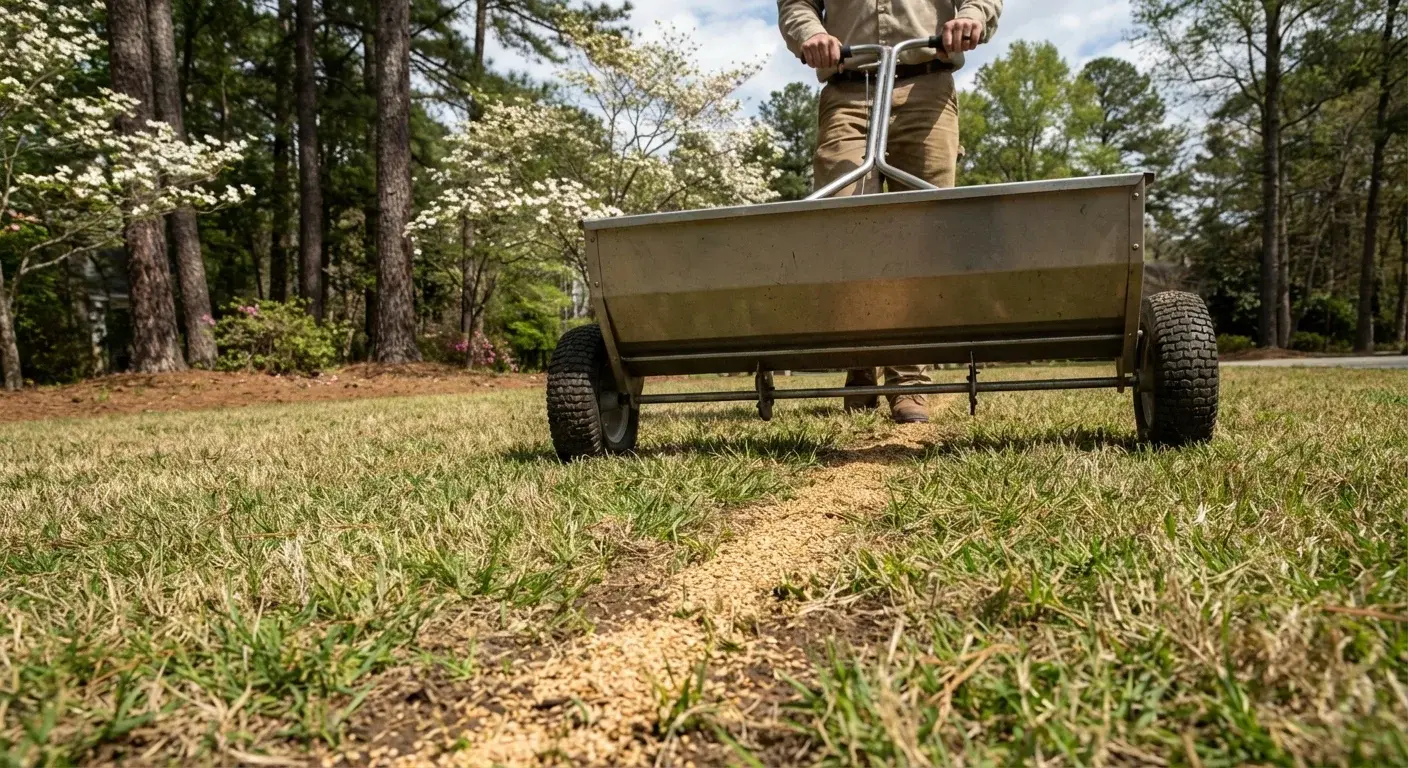
  3. 3Even distribution using calibrated spreaders
  4. 4Best performed immediately after aeration
  5. 5Post-seeding care instructions for optimal germination

Also Serving Nearby Cities

If you're close to the area, there's a good chance I can help.

Overseeding Questions in Concord

When is the best time to overseed my Concord lawn?

For Bermuda thickening in Concord, early September is ideal — soil temperatures are still above 70 degrees, the grass is actively growing, and there's enough growing season left for seedlings to establish before dormancy. For fescue in shaded areas, mid-September through mid-October works best when soil temps are cooling to the 60 to 75 degree range that fescue prefers. For winter ryegrass, mid to late October after Bermuda starts going dormant. I time each overseeding to match the specific seed type and Concord's seasonal conditions.

Do I need to overseed Bermuda every year in Concord?

Not if your Bermuda is healthy and dense. Bermuda fills in through lateral stolons and rhizomes, so a thick stand maintains itself through natural spreading. I recommend overseeding only when the lawn has thinned significantly from stress, damage, or disease. Annual overseeding is more commonly needed for fescue in shaded areas since fescue doesn't spread laterally and naturally thins in Concord's warm summers. If your Bermuda is solid, good fertilization and weed control maintain density without annual seeding.

Why won't grass grow in that one thin spot on my Concord property?

Persistent thin spots on Concord properties usually have an underlying cause that seed alone won't fix. Common culprits are severe soil compaction in high-traffic areas, poor drainage creating soggy conditions, buried construction debris preventing root growth, or soil contamination from old spills. I investigate persistent thin spots before recommending overseeding because throwing seed at a soil problem wastes money. Once I identify and fix the underlying issue, the overseeded area establishes normally.

Should I water differently after overseeding in Concord?

Yes. After overseeding, the top half-inch of soil needs to stay consistently moist for 2 to 3 weeks until germination occurs and seedlings establish initial roots. On Concord's red clay, this means light, frequent watering — 5 to 10 minutes two to three times per day rather than one deep soak. Concord's clay surface dries quickly in the sun, so frequent light irrigation keeps the seed zone moist without saturating the soil. Once seedlings are established, I transition you back to normal deep, infrequent watering.

Ready for a Healthier Lawn?

Get a free, no-obligation quote for your property. We'll assess your lawn and recommend the perfect plan.