Core Aeration for Georgia Clay Lawns: When It Helps
GopherTurf
Georgia lawn-care guides
Core aeration can help a compacted lawn, but clay soil does not automatically mean every problem needs aeration. Persistent puddles may reflect grading or drainage; thin turf may be caused by shade, disease, or poor establishment. Start with the cause.
What core aeration does
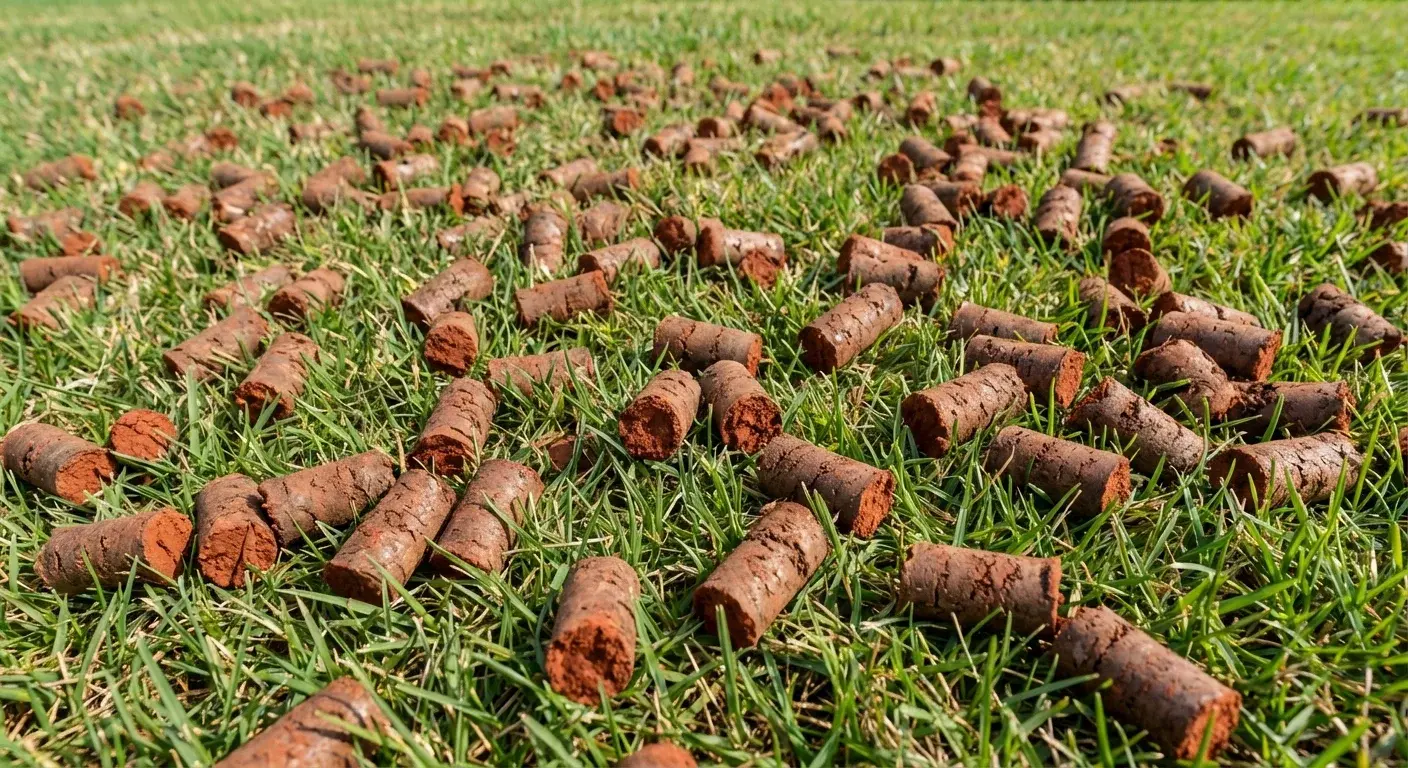
A core aerator removes plugs rather than simply punching narrow holes. This creates openings in the root zone and helps relieve compaction. UGA's turfgrass soil and aeration guidance describes soil structure, organic matter, pH, and cultivation as connected parts of lawn management.
Aeration does not change clay into another soil type. We do not promise a fixed percentage improvement in drainage or describe liquid products as a guaranteed replacement for mechanical core aeration.
Signs worth checking
- Turf thins along regularly traveled paths.
- Water runs off before the root zone becomes moist.
- Roots appear restricted in a compacted layer.
- Lawn trouble persists despite appropriate watering and nutrition.
These observations guide an inspection; none proves compaction on its own. Compare affected and healthy areas, including differences in sunlight and traffic.
Choose the season for your grass
Warm-season Bermuda and Zoysia generally recover best during active growth in late spring or summer. Tall fescue usually fits a fall aeration schedule. Avoid cultivating dormant, drought-stressed, or waterlogged turf. Clemson's aeration guide discusses timing, soil moisture, and varying frequency according to traffic and soil conditions.
Prepare for the visit
Tell your provider about irrigation heads, shallow utilities, buried wires, drainage features, and other obstacles. Share recent herbicide applications and any seeding plans. Ask for specific preparation instructions; soil should be suitable for pulling cores rather than saturated or extremely hard.
Is overseeding necessary?
Not automatically. Thin Bermuda or Zoysia may recover through vegetative growth when the underlying problem is corrected. Some cultivars cannot be repaired true-to-type from seed. Tall fescue overseeding is a separate grass-specific decision.
GopherTurf offers core aeration and overseeding where appropriate throughout our service area, including Zebulon. Request an aeration quote with the lawn size, grass type, and areas of concern.