5 Signs Your Georgia Lawn Has a Fungus Problem
GopherTurf
Georgia lawn-care guides
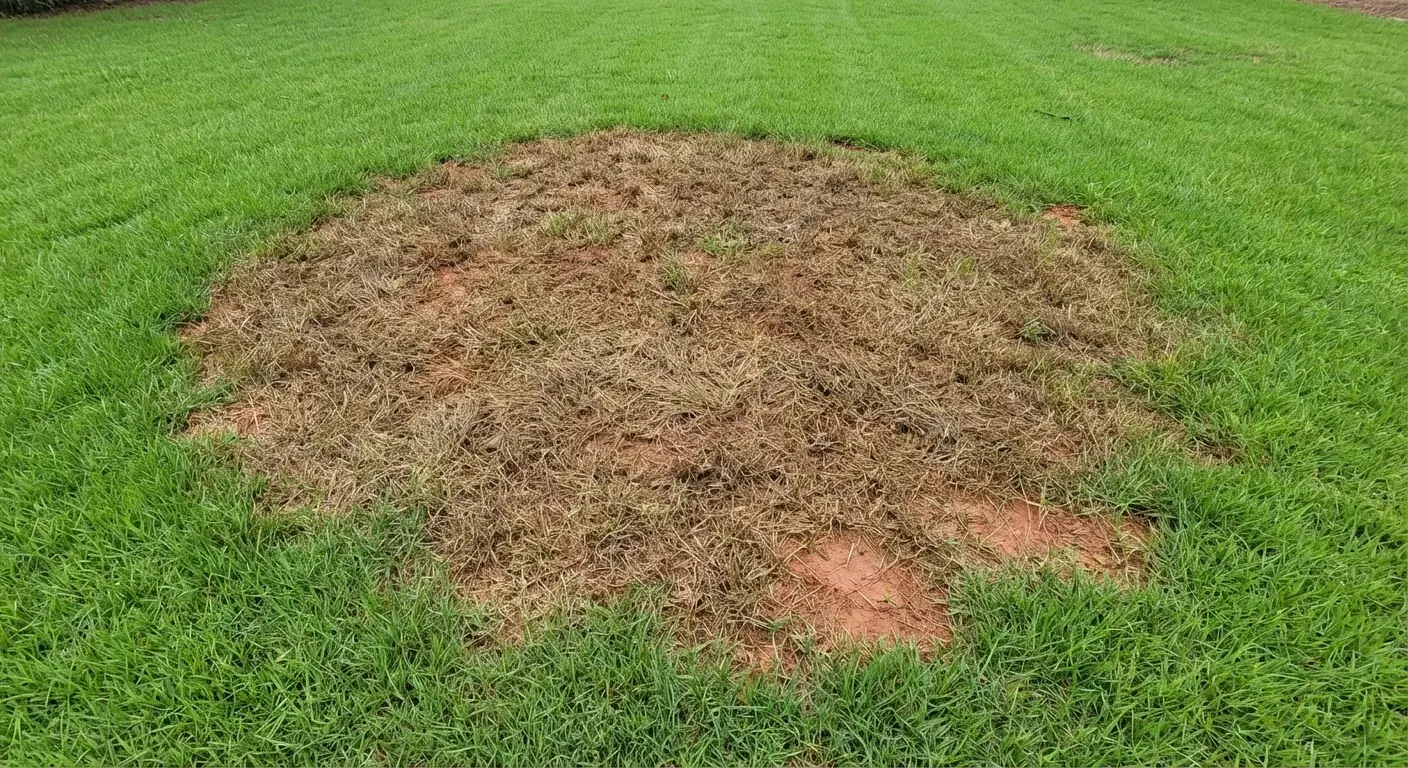
Brown patches are a reason to investigate, not proof that a lawn needs fungicide. Turf disease, drought, insects, drainage, and dormancy can produce similar-looking damage. Start by identifying the grass and recording when symptoms appeared.
1. Expanding circular patches
Look at the edge of the affected area and whether the surrounding grass is actively growing. Brown patch is associated especially with susceptible cool-season turf; large patch affects susceptible warm-season grasses, including Zoysia. Their activity and management differ. Clemson's brown patch and large patch guide explains why the names should not be used interchangeably.
2. Small straw-colored spots
Small pale patches and lesions across leaf blades can be consistent with dollar spot, but an image of the whole lawn is not enough to confirm it. Check individual leaves and review moisture and nutrition. Avoid adding nitrogen indiscriminately when the grass or season makes that inappropriate. See Clemson's guide to leaf diseases.
3. Defined spots or lesions on individual leaves
Gray leaf spot produces lesions that enlarge on leaves; it is not simply a gray powder coating. UGA describes brown spots developing gray centers and notes particular concern on St. Augustinegrass. UGA's gray leaf spot identification guide includes symptoms and management context.
4. Areas that remain dead during spring green-up
If Bermuda greens up around persistent dead patches, investigate rather than assuming fertilizer will fix them. Spring dead spot is one possible cause and may require management well before the next spring's visible symptoms. UGA's spring dead spot guide explains the disease cycle.
5. Rapid change after wet weather
Spreading discoloration, wet-looking turf, or unusual growth on leaves deserves prompt inspection. Photograph the change and note irrigation, rainfall, recent treatments, and whether the soil stays wet. Speed of change alone does not identify the organism.
What to do before treatment
Take a wide photo, a close-up of affected leaves, and a photo of the boundary between healthy and damaged turf. Avoid combining several products in an attempt to cover every possible cause. A turf professional or Extension diagnostic service may need a sample.
Review watering and the cause of prolonged wetness. A fungicide cannot restore dead grass immediately or correct a drainage defect. Recovery depends on surviving plants and suitable growth conditions.
GopherTurf provides lawn fungus treatment as part of turf management across our seven-county service area. We do not provide indoor mold testing or remediation. Request a lawn assessment.