The Complete Winter Lawn Care Checklist for Georgia Homeowners
GopherTurf
Georgia lawn-care guides
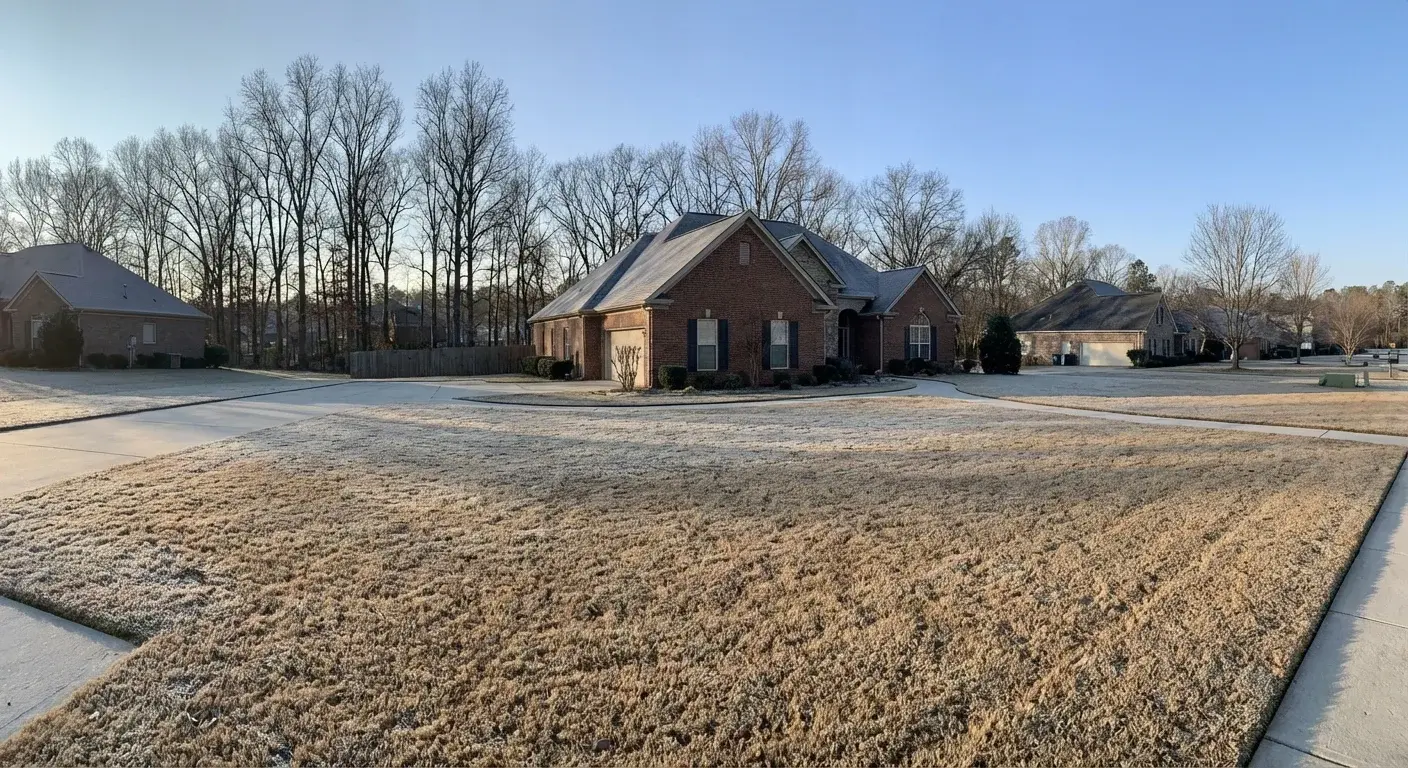
Winter lawn care in central Georgia is mostly about protecting the lawn and preparing the next season's work. Dormant Bermuda or Zoysia should not be managed like actively growing tall fescue. Brown winter color alone does not mean warm-season grass has died.
Keep the lawn clear and observe wet areas
Remove heavy leaf accumulation and debris. Note where water collects after rain and whether it drains away. Limit traffic on saturated or frozen turf. Those observations will help distinguish soil compaction from a drainage issue when growth resumes.
Review winter weeds
Look for weeds while they are small and identify them before choosing a product. Established winter weeds are a different problem from preventing the next generation. Check the grass type, temperature restrictions, and previous applications before any herbicide treatment.
Our weed-control guide explains the difference between preventive and corrective treatments.
Plan from a soil test
A soil test can guide pH and nutrient decisions. Tell the lab which grass you are growing; recommendations for Centipede differ from those for Bermuda or Zoysia. UGA explains why sampling ahead of the growing season is useful in Take the Guesswork out of Growing with a Soil Test.
Do not apply lime or fertilizer simply because the lawn is brown. Review the results and the grass's growth cycle first.
Adjust watering to conditions
Dormant turf uses less water, but a dry winter is different from a wet one. Inspect soil moisture rather than leaving a summer irrigation schedule running. Clemson's watering guide discusses how soil and turf affect watering decisions.
Keep a record for spring
Save treatment dates, product names, recurring problem locations, and photos from the same viewpoints. Note where the lawn struggled during summer and which areas stayed wet in winter. This gives your provider more useful information than a general request to “make it greener.”
Review the Georgia lawn-care calendar and arrange spring weed prevention before weeds establish. GopherTurf serves all seven listed counties year-round; request a quote or call (762) 777-1138, 9 AM–5 PM daily.