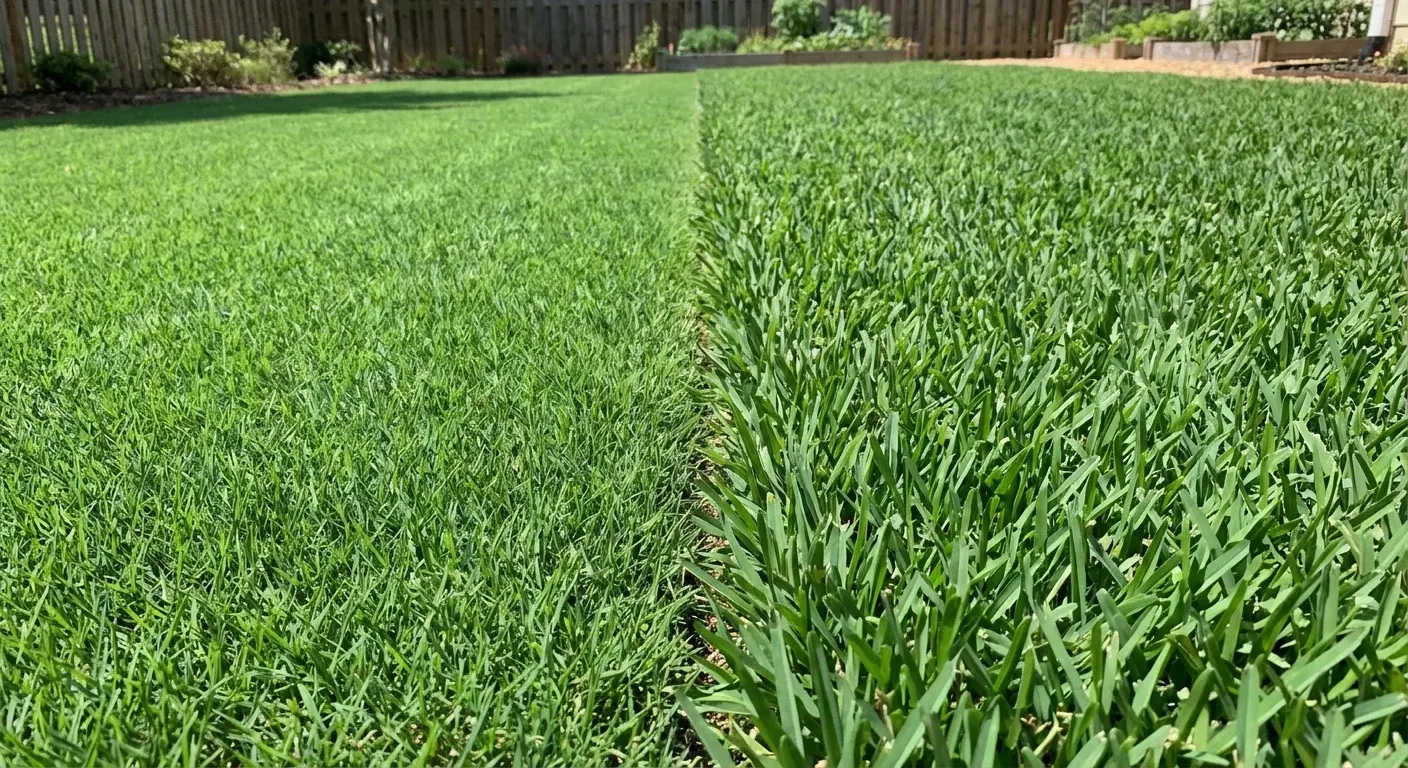
Bermuda vs. Zoysia: Which Grass Is Best for Your Georgia Lawn?
GopherTurf
Georgia lawn-care guides
Bermuda and Zoysia can both be suitable warm-season lawn grasses in Georgia. The right choice depends on the specific cultivar, sunlight, traffic, and maintenance expectations. Neither is a cure for deep shade, poor drainage, or compacted construction soil.
Start with the site
Before choosing grass, record sunlight across the lawn at different times of day. Separate the sunny front yard from shaded sections rather than treating the property as one uniform site. Consider where people and pets regularly travel, and whether those routes can be changed.
Ask a turf supplier about named cultivars suitable for the site. “Bermuda” and “Zoysia” describe groups with meaningful differences, not identical products sold under different names.
Recovery and maintenance
Bermuda is commonly chosen for sunny, actively used turf and can spread vigorously under suitable growing conditions. Zoysia forms a dense lawn but some varieties recover more slowly from damage. Mowing equipment, cutting height, and maintenance frequency should suit the selected variety. Clemson's Zoysia maintenance program illustrates why cultivar and site conditions affect care.
Both grasses normally enter winter dormancy. Decide whether seasonal brown color is acceptable before committing to additional winter-color practices with their own maintenance and transition needs.
Do not assume seed will match existing sod
Identify your existing cultivar before repairing bare patches. Many hybrid Bermuda and Zoysia cultivars are established vegetatively; an unrelated seed blend will not reproduce the original lawn. A lawn may need its shade, watering, or soil problem corrected before any repair succeeds.
GopherTurf offers overseeding when appropriate, but does not install sod. Use a qualified installer for a sod project and retain the cultivar name and establishment instructions for ongoing care.
Compare care before comparing appearance
Use UGA's grass-specific maintenance calendars as a starting point. Consider the whole year's mowing, irrigation, nutrition, and weed-control requirements, not just how a sample looks on installation day.
Caring for an existing lawn
You may not need to replace your grass. If the current lawn is thinning, assess compaction, weeds, nutrition, shade, and water first. Request a turf-management assessment and include the grass variety if known. We provide weed control, fertilization, aeration, and lawn-health treatments throughout our central Georgia service area.