Overseeding in Pike County, GA
If your lawn is in Pike County, GA, overseeding needs to be timed and targeted — not guessed at. My job is to treat what's real on your property and keep your turf strong enough that problems don't keep cycling back.
What You Get
- Fills in thin and bare spots for uniform coverage
- Introduces improved, disease-resistant grass varieties
- Increases lawn density to crowd out weeds naturally
- Enhanced results when paired with core aeration
- Seed varieties selected for Georgia's climate
Local Reality in Pike County, GA
This is what I'm planning around when I treat lawns in this area:
- Clay compaction is common — aeration makes a big difference.
- Pre-emergent timing is key for clean spring turf.
- Summer humidity can trigger fungus if watering is off.
Overseeding Details for Pike County
Here's what overseeding looks like in practice when I'm treating lawns in Pike County, GA.
Fall Overseeding for Thin Bermuda Lawns
If your Pike County Bermuda lawn has thinned out from summer stress, compaction, or disease damage, fall overseeding with improved Bermuda varieties can help thicken the stand. I time overseeding in early September, after aerating and when soil temps are still warm enough for germination. The aeration holes provide seed-to-soil contact that surface broadcasting alone cannot match. I select Bermuda cultivars bred for our climate zone that establish quickly and blend well with your existing turf.
Shade-Tolerant Overseeding in Transitional Areas
Many Pike County properties have areas where mature hardwoods create too much shade for Bermuda or Zoysia to thrive. Instead of fighting a losing battle, I overseed these transitional zones with shade-tolerant tall fescue or fine fescue varieties. This approach gives you green, dense turf under tree canopy while your warm-season grass handles the sunny areas. The key is selecting the right fescue variety and managing it separately from the Bermuda — they have different fertilization and mowing needs.
Winter Ryegrass Overseeding for Year-Round Color
Some Pike County homeowners want green all winter, and annual ryegrass overseeding delivers that. I seed perennial or annual ryegrass into dormant Bermuda in October, giving you a green lawn through winter while the Bermuda is brown. The ryegrass dies off naturally as temperatures rise in spring, allowing the Bermuda to take back over. I'm selective about recommending this — it's additional cost and can slow Bermuda spring green-up if the ryegrass lingers too long.
Overseeding Site Preparation on Red Clay
Overseeding success on Pike County red clay depends almost entirely on site preparation. Broadcasting seed over hard, compacted clay is a waste of time and money — the seed sits on the surface and never makes good root contact. I always pair overseeding with core aeration, and in severe cases I'll verticut or slit-seed to create direct furrows in the soil. I also top-dress with a thin layer of compost or sand mix to improve the germination environment and hold moisture around the seed.
How I Handle Overseeding
A repeatable process that's built for results — not for selling you more visits.
- 1Assessment of thin or bare areas
- 2Seed variety selection for your lawn type
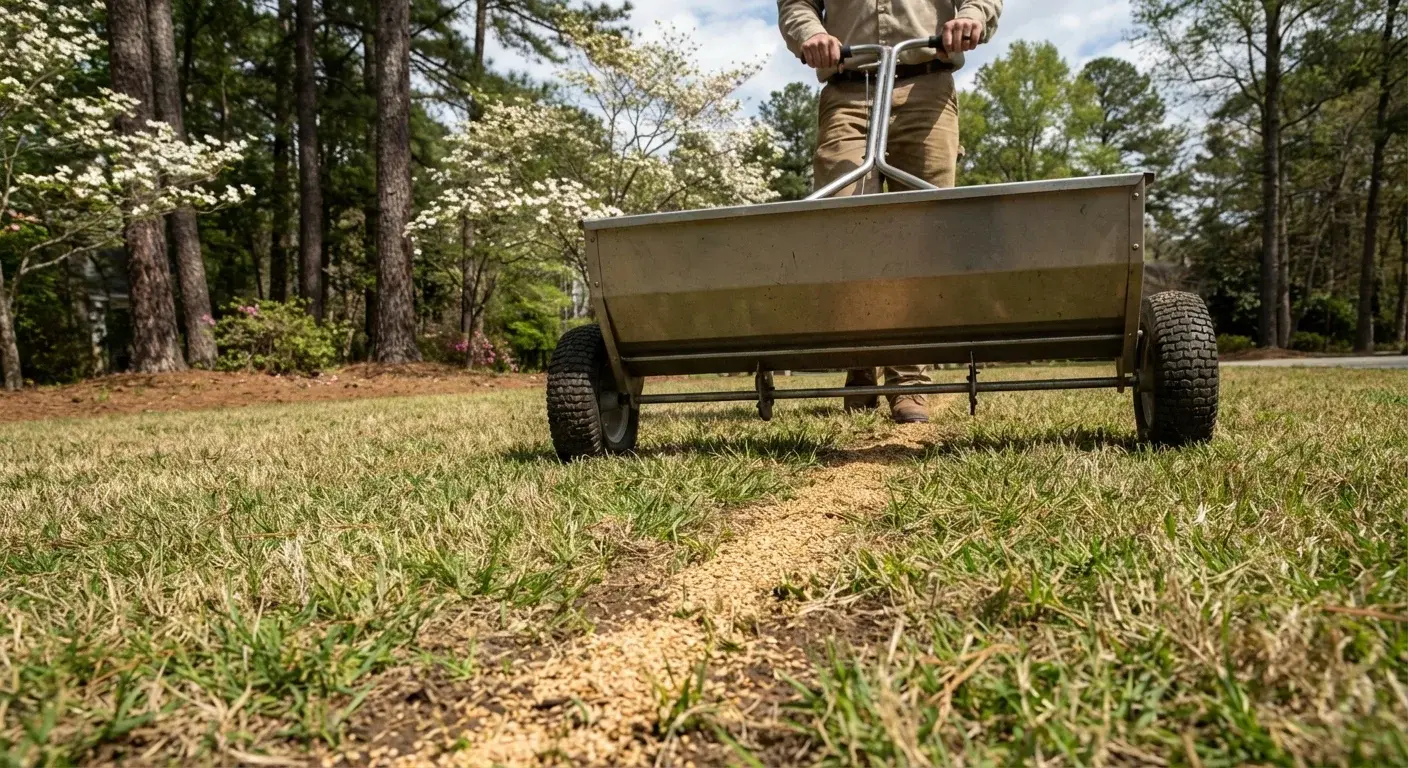
- 3Even distribution using calibrated spreaders
- 4Best performed immediately after aeration
- 5Post-seeding care instructions for optimal germination
Also Serving Nearby Cities
If you're close to the area, there's a good chance I can help.
Overseeding Questions in Pike County
When should I overseed my lawn in Pike County?
For warm-season overseeding with Bermuda, the ideal window is late August through mid-September while soil temperatures are still above 65 degrees. For cool-season fescue in shaded areas, mid-September through mid-October is best. Winter ryegrass overseeding goes down in mid to late October once the Bermuda starts going dormant. I time these windows specifically for Pike County's climate patterns — our first frost usually hits in late October to early November.
Can I overseed Zoysia grass in Pike County?
Zoysia is slower to establish from seed than Bermuda, so overseeding existing Zoysia lawns requires more patience. I typically recommend Zoysia plugs or sod for filling bare spots rather than seed, especially in Pike County where our clay soil makes seed germination more challenging. If you do want to overseed with Zoysia seed, I use improved varieties and combine it with aggressive aeration and topdressing to give the seed the best possible germination conditions.
How long does it take for overseeded grass to establish in Pike County?
Bermuda grass seed germinates in 7 to 14 days in warm Pike County soil and takes about 6 to 8 weeks to establish a solid stand. Tall fescue germinates in 10 to 14 days and fills in within 4 to 6 weeks. Annual ryegrass is the fastest at 5 to 10 days for germination. The biggest factor on our red clay is consistent moisture during the first 3 weeks — the seed bed needs to stay damp but not waterlogged. I'll set up a watering schedule specific to your property.
Do I need to overseed every year in Pike County?
Not necessarily. If your Bermuda or Zoysia lawn is healthy and dense, annual overseeding isn't needed — these grasses fill in through lateral growth. Where I recommend annual overseeding is for fescue areas in shade, which thin naturally in Pike County summers and need replenishment each fall, and for lawns recovering from significant damage. Once your warm-season lawn is fully established and dense, good cultural practices and proper fertilization maintain thickness without yearly seeding.
Ready for a Healthier Lawn?
Get a free, no-obligation quote for your property. We'll assess your lawn and recommend the perfect plan.