Back to Blog
May 5, 2026Updated May 19, 20266 min read

Complete Weed Control Guide for Georgia Lawns

Kenneth Gay

GopherTurf Owner, Licensed Lawn Care Professional

Effective weed control on Georgia lawns requires three things: properly timed pre-emergent applications in late February and September, targeted post-emergent treatment for breakthrough, and building dense healthy turf that crowds weeds out. Most Georgia weed problems trace back to one of two root causes — missed pre-emergent timing or thin turf that lets weeds establish — and chasing individual weeds with spot-spraying without addressing the root cause means fighting the same battle every year.

The Weed Problems Every Georgia Lawn Faces

Six weeds account for the vast majority of complaints I see across central Georgia lawns:

1. Crabgrass. The biggest summer annual problem. Germinates when soil temps hit 55°F (late February in central Georgia). Spreads through summer, dies off with first frost. Pre-emergent timing is the entire game with crabgrass.

2. Goosegrass. Tougher cousin of crabgrass. Germinates slightly later, prefers compacted thin areas. Same pre-emergent strategy works, but goosegrass tolerates standard pre-emergents better — sometimes needs a stronger product.

3. Nutsedge (yellow and purple). Sedge — not a true grass. Thrives in wet poorly-drained areas. Standard herbicides won't touch it. Requires sedge-specific products like sulfentrazone or halosulfuron.

4. Dallisgrass. Perennial clumping grass that grows faster than surrounding turf. Often spreads from neighboring pastures or fields. Hardest weed to control once established. Requires multi-application selective herbicide programs.

5. Poa annua (annual bluegrass). Winter annual weed that germinates in fall and dies off in summer heat. Bright green clumps in dormant Bermuda or Zoysia turf. Fall pre-emergent is the primary control.

6. Broadleaf weeds (clover, chickweed, henbit, wild onion). Various winter and summer annuals. Most respond to standard selective broadleaf herbicides like 2,4-D, MCPP, or dicamba blends.

Pre-Emergent: The Most Important Application of the Year

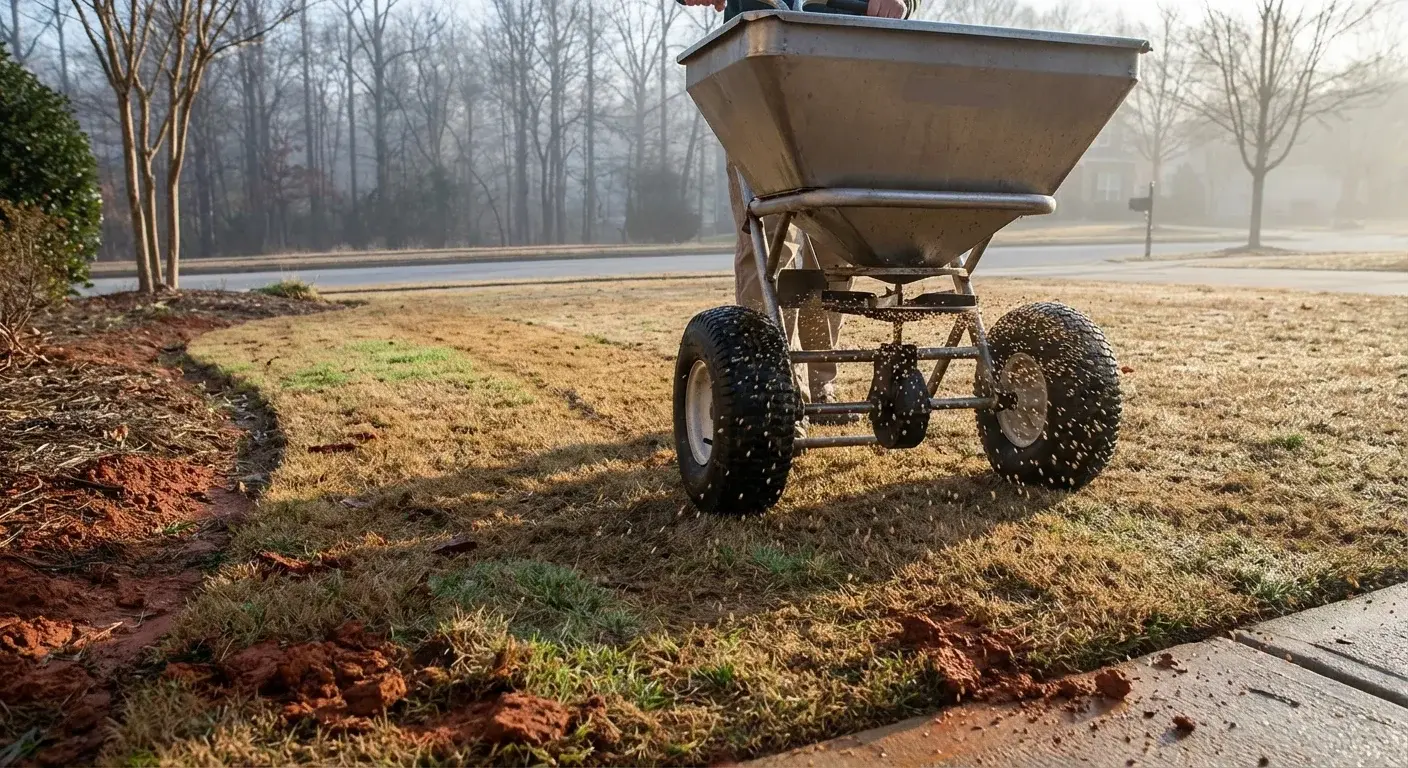
Pre-emergent herbicide creates a chemical barrier in the top inch of soil that kills weed seedlings as they germinate. The key insight: pre-emergent does nothing to weeds that have already sprouted. Timing has to come before germination, not after.

For central Georgia:

  • Spring pre-emergent: Late February to early March, when soil temps hit 55°F at a 4-inch depth. Targets crabgrass, goosegrass, spurge, chamberbitter.
  • Fall pre-emergent: September, when soil temps drop below 70°F. Targets poa annua, henbit, chickweed.

Professional-grade products like prodiamine and dithiopyr provide 12–16 weeks of residual control versus 6–8 weeks for hardware store products. That's why DIY pre-emergent often fails — the consumer product runs out before peak germination season is over.

Post-Emergent: When Weeds Break Through

When weeds escape the pre-emergent barrier, post-emergent herbicides target the actively growing plants. Different weed types need different products:

  • Crabgrass/goosegrass (small): Quinclorac or fenoxaprop products. Work best on young plants — mature weeds are much harder to kill.
  • Nutsedge: Sulfentrazone or halosulfuron. Apply when soil is moist and plants are actively growing.
  • Dallisgrass: MSMA (where legal) or specialized programs. Often requires 3–4 applications across a season.
  • Broadleaf weeds: 2,4-D + MCPP + dicamba blends. Apply in cooler weather (60–80°F) for best results.

Spot-treating individual weeds works for small problems. For widespread breakthrough, blanket applications often make more sense.

Building Turf Density Is the Long-Term Fix

Pre-emergent and post-emergent are tactical tools. The strategic fix is building turf so dense that weeds can't establish in the first place. Dense turf shades the soil, prevents seeds from reaching light, and outcompetes weeds for water and nutrients.

Building density requires:

  1. Proper fertilization timed to the growing season
  2. Annual core aeration to relieve compaction
  3. Overseeding thin areas to fill in gaps
  4. Correct mowing height — most homeowners cut too short, weakening the turf
  5. Deep-and-infrequent watering to encourage root depth

Within 2–3 seasons of consistent care, weed pressure drops dramatically because the turf simply doesn't have room for weeds anymore.

Common Mistakes That Make Weed Problems Worse

Mistake 1: Mowing too short. Cutting Bermuda below 1.5" or Zoysia below 1.5" stresses the turf and creates space for weed germination. Mow at the high end of the recommended range during stress periods.

Mistake 2: Watering shallow and daily. Light frequent watering creates shallow roots that can't compete with weeds. Water 1–1.5 inches once or twice a week.

Mistake 3: Reactive treatment only. Spot-spraying weeds when they're visible means they've already gone to seed. Prevention with properly timed pre-emergent is far more effective.

Mistake 4: Wrong product for the weed. Spraying broadleaf herbicide on nutsedge does nothing. Spraying crabgrass killer on dallisgrass barely works. Match the product to the weed.

Mistake 5: Skipping fall applications. Most homeowners focus on spring and stop in August. Fall pre-emergent for poa annua is just as important — and it's the application most DIY programs miss.

The Professional Take

Weed control done right isn't expensive — it's chasing weeds with reactive spot-spraying that gets expensive. A properly designed weed program with two pre-emergent applications, two or three post-emergent visits, and density-building fertilization runs $400–$650/year for most central Georgia lawns and dramatically outperforms DIY or reactive programs.

GopherTurf Service Areas

We provide comprehensive weed control programs across central Georgia, including Pike County, Henry County, Newton County, Clayton County, Butts County, Jasper County, and Morgan County. Get a free quote and we'll build a year-round program that actually wins.

Ready for a Healthier Lawn?

Get a free, no-obligation quote for your property. We'll assess your lawn and recommend the perfect plan.