Overseeding in Jonesboro, GA
Lawn treatments in Jonesboro, Clayton County: weed control, fertilization, aeration, and turf management, with eight scheduled visits per year. For overseeding, that means treating what's actually on your property — not running a generic schedule.
Need the county-wide overview? Explore overseeding across Clayton County, GA.
What You Get
- Seed choices compatible with the existing lawn
- Timing based on grass type
- Coordination with herbicide restrictions
- Clear establishment and watering instructions
Local Reality in Jonesboro, GA
This is what I'm planning around when I treat lawns in this area:
- Identify the grass and the cause of thinning before treatment.
- Coordinate weed control with any seeding plans.
- Schedule aeration and feeding for the appropriate growth cycle.
Overseeding Details for Jonesboro
Here's what overseeding looks like in practice when I'm treating lawns in Jonesboro, GA.
Overseeding in Jonesboro, GA
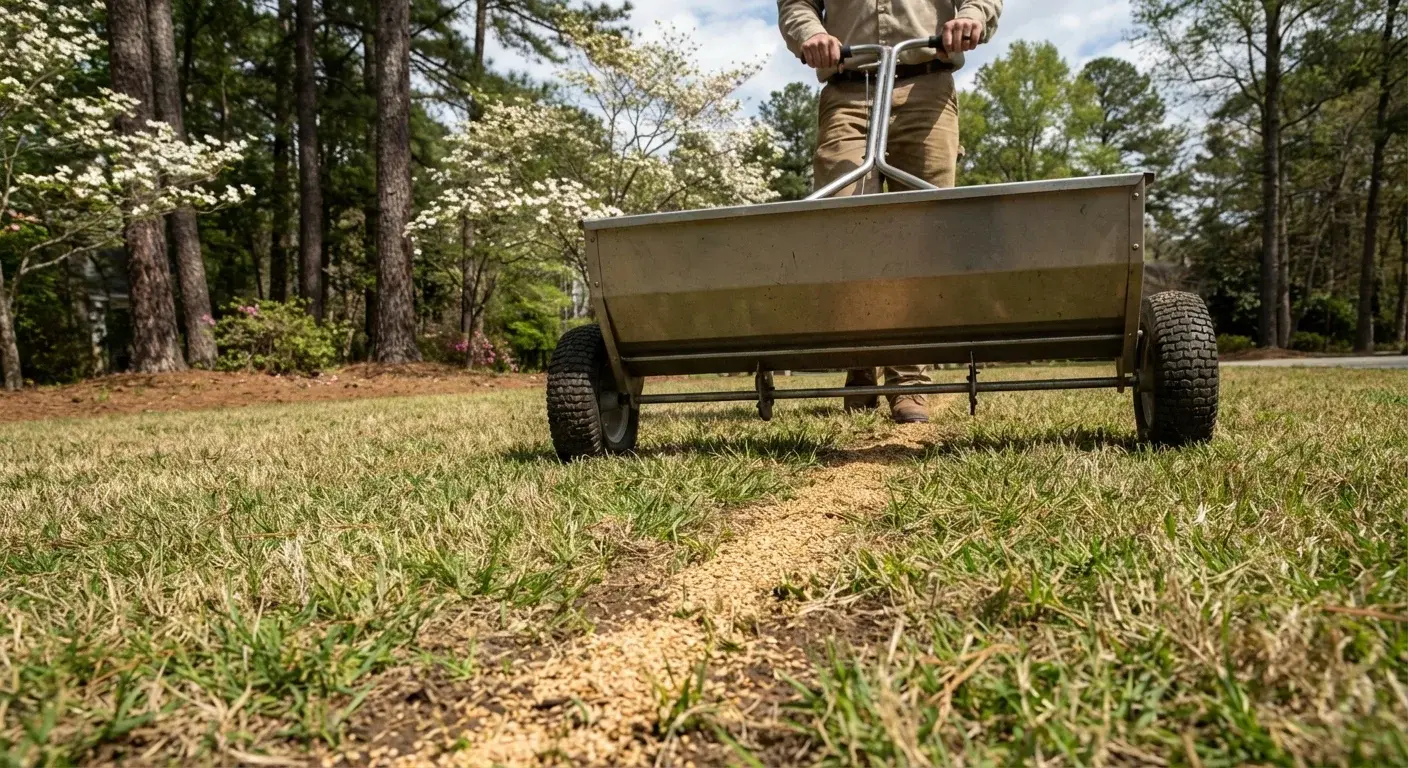
GopherTurf offers overseeding when it is appropriate for the lawn. We first identify the existing grass and the reason for thinning. Fall overseeding is commonly associated with tall fescue; it is not a universal repair for Bermuda or Zoysia. Seed choice, soil preparation, watering, and herbicide restrictions all affect establishment. Confirm the seeding scope in your quote.
What to include in your quote request
For Jonesboro, send the property address, approximate lawn area, grass type if known, and recent treatment dates. Describe the problem and any seeding plans. We confirm scope and timing before booking.
How I Handle Overseeding
A repeatable process that's built for results — not for selling you more visits.
- 1Identify the grass and cause of thinning
- 2Confirm that suitable seed is available
- 3Plan timing and preparation
- 4Coordinate weed-control intervals
- 5Explain establishment care
More Overseeding Near Jonesboro
Explore nearby overseeding pages throughout Clayton County.
Overseeding Questions in Jonesboro
Is overseeding included in every package?
Overseeding is available if needed. Your quote will confirm whether it is appropriate and any additional scope or cost; it is not listed as an automatic package inclusion.
Can you overseed hybrid Bermuda?
Hybrid Bermuda generally needs vegetative repair rather than seed to preserve the cultivar. We assess the existing lawn before recommending a repair. We do not install sod.
Can pre-emergent and seeding happen together?
Many pre-emergents interfere with grass establishment. The specific product label determines the waiting period or whether use around seeding is allowed.
Ready for a Healthier Lawn?
Get a free, no-obligation quote for your property. We'll assess your lawn and recommend the perfect plan.